
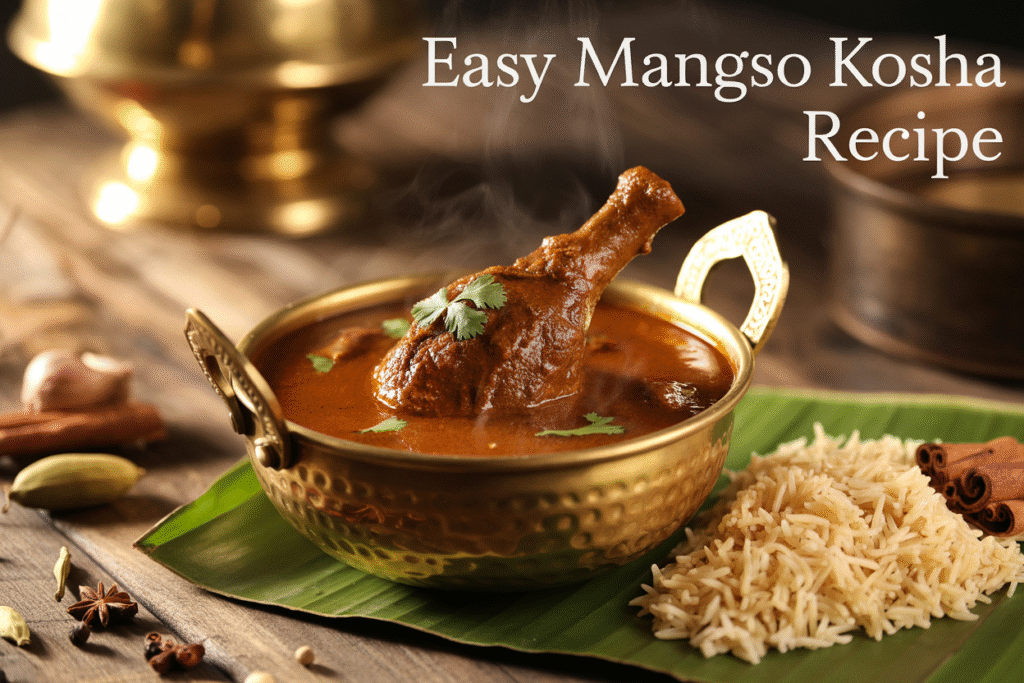
A Step-by-Step Guide to Easy Mangso Kosha Recipe

Planning to prepare an authentic Bengali mutton curry at home? Scrumptious Mangso Kosha is a simple yet scrumptious recipe which has the robust and fiery Bengali flavors. Ideal for home cooks who want to master this favorite Bengali goat curry without puzzling over complicated techniques for hours.

Mangso Kosha is not just another curry but a Bengali non-veg goat mutton based dish where pieces of tender meat are slow-cooked with spiced caramelized onions and aromatic spices until the meat is soft and melting in the mouth. This guide is for anyone who loves big, real flavor but wants a simple way to develop it that really works.

They’ll share their secret insight into what makes difference in Mangso Kosha – how spices really makes the signature flavors behind this Bengal mutton recipe. We’ll guide you through every step along the way, explaining not just what to do, but why you’re doing it so that you can make balanced-texture/béchamel-perfecting buck à l’indienne. You’ll also receive expert advice to help you make restaurant-quality dishes in your own kitchen (and right in time for summer).

Mangso Kosha and its Regional Implications
Origins and cultural importance in Bengali cuisine

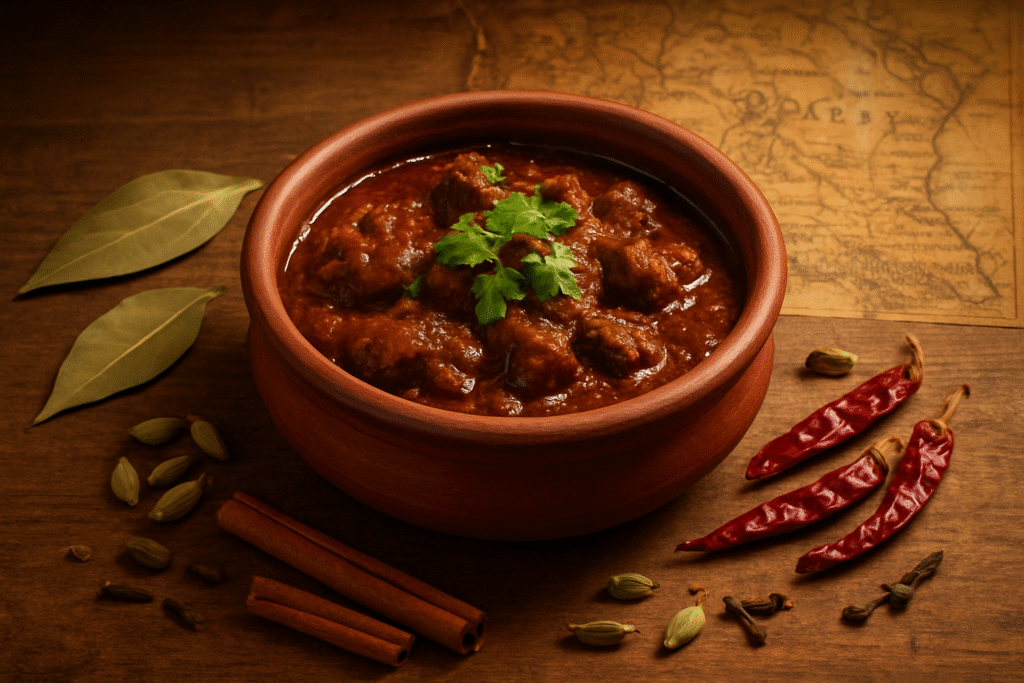
Mangso Kosha is an iconic dish in Bengali households, representing hundreds of years’ worth of culinary legacy coming from the eastern part of India. This original Mangso Kosha recipe has been passed down from the Mughal impact in Bengali cooking, which combined slow-cooking methods with native spice traditions. It became a celebratory dish, not to mention one that takes skill and patience to achieve the ideal balance of tender meat with intense, flavorful reduced braising liquid.

Bengali chefs have handed down this traditional Mangsho Kosha recipe from one generation to another generation, where every household imbues their personal secret touches, maintaining the soul of it. The “kosha” cooking method also includes a very specific type of browning process, so the translated term means to fry or sauté until the spices have released their oil and made a thick, clinging gravy. This Bengali mutton curry soon came to be associated with hospitality and abundance, serving as a dish of choice when receiving distinguished visitors or marking milestones.

It’s more than just a delicious meal with cultural significance, yes? Making Mangso Kosha is ersatz Bong in that it simply embraces the Bengali wisdom of spending all day doing something pretty and profound. The cooking process is also a reflection of the Bengali way of life—slow, patient, detailed, and extremely satisfying. To many Bengali families,” says Udit Sarkhel, “it becomes a rite of passage for home cooks and a necessary part of the bride’s culinary skills in feeding her family.”

Flavor Makers for this Ground Meat Stroganoff

The magic of this easy Mangso Kosha is in the layered subtlety and depth of flavors that comes from technique and timing. The flavor is heavy on the garam masala with earthy undertones of cumin, coriander, and turmeric. A fresh ginger-garlic paste forms the aromatic base, and hot red chili powder lends a kick that barely nips out of fear of offending sensitive palates.

What sets this Bengali goat curry recipe apart is the sweet and savory components complementing one another perfectly. Caramelized onions contribute natural sweetness to balance the strong spices, while yogurt gives tang and offers a way to tenderize the meat. The “kosha” method enhances these flavors, yielding a velvety sauce that clings to each piece of meat.

The spice mixture give you several taste opportunities:

Black cardamom and cinnamon heat to the fore moments later

There’s a deep earthiness from ground coriander and cumin

Slight heat giving slow from red chilies

Bay leaves and whole spices provide aromatic complexity

Deep umami from slow-stewed onions and meat juices

Some bay leaves offer an aroma that is undeniably Bengali, while mustard oil (if it’s being used in traditional fashion) adds a sharp, pungent flavor that fades as everything cooks. The end dish has what Bengali cooks mean when they talk about “bhaja masalar gondho” — the smell of spices just right.

Cultural events where Mangso Kosha is served at Tradition (moment)

Mangso Kosha graces the Bengali spread for all life’s significant moments and celebrations. At wedding feasts where it is nearly always ordered as the star protein, its cooking in massive quantities ensures, that hundreds of guests are fed copiously. Unfortunately, the Mangso Kosha you get to taste in these events are of restaurant style and generally sets up a standard of measuring one’s culinary skills for families.

Among the Bengalis, who celebrate one of their biggest festivals, Durga Puja, in three days’ time, rich spreads are prepared for family feasts, with Mangso Kosha sharing the limelight with rice, fish curry, and vegetables. The preparation starts days ahead, with families hunting for the freshest cut of meat and grinding the spices to perfection. In many homes it is also a ritual where some part of it will be offered to the goddess before serving guests.

It is another one of those Sunday afternoon family lunches that brings together many generations, for which you can use this Mangso Kosha recipe step by step. Many a grandma overlooks teaching young ones how to make the perfect masala or brown meat.

Instances of Mangso Kosha in special events are as below:

Poila Boishakh (Bengali New Year Party)

Kali Puja and Diwali festivities

Birthday celebrations and anniversary dinners

Welcome meals for family members at home after a trip

Religious ceremonies and community gatherings

It also acts as a comfort food for monsoon weather, when the rich and warm spices of curry provide relief against the damp cool weather. It is a dish that many Bengali families make during the winter months since they believe that it keeps out the cold and helps to build immunity while providing necessary nutrition for people in colder months.

You actually need specific ingredients to definitely make perfect Mangso Kosha

 These basic items are actually very important for the dish

Further, choosing the right mutton or goat meat cut is actually very important for good cooking. You should definitely pick fresh pieces that look red and smell good.

To make good Mangso Kosha, choosing the right meat cut itself is most important for further cooking success. Goat meat

As per traditional cooking methods, this remains the best choice for authentic Mangso Kosha regarding its strong taste that goes well together.

We are seeing Bengali spices only being used in this dish. You should actually look for cuts from the shoulder, leg, or neck area because these parts definitely contain the perfect meat.

Basically, it has the same mix of lean meat and fat that makes it tender and tasty.

When buying goat meat, one should surely choose pieces that have deep red color with very little fat lines. Moreover, such meat pieces are generally fresher and of better quality. The

Fresh meat should surely feel firm when touched and must have a clean smell. Moreover, any meat with soft texture or bad odor should be avoided. Bone-in pieces work very well and can further enhance the cooking process itself.

Bones are used for Mangso Kosha because they add further depth to the curry flavor itself during slow cooking.

As per availability in your area, you can use mutton regarding goat meat substitute. We are seeing that selecting cuts like this only gives better results.

Basically, you can use shoulder chops, leg pieces, or the same ribs also. Basically avoid very lean cuts like tenderloin, as they can become the same way – too dry.

We are seeing that the meat becomes tough only during the long cooking time needed for making Bengali mutton curry.

Moreover, for portion planning, you should actually calculate around 200-250 grams of meat per person. This amount will definitely be enough for one serving. The meat should surely be cut into pieces, and moreover, this process must be done carefully.

Further, cut into medium pieces of 2-3 inches each as per uniform cooking needs and regarding better spice absorption.


Spices and Aromatics essential for Mangso Kosha

As per authentic Mangso Kosha preparation, the main ingredients are whole spices that give the dish its typical taste and smell. Regarding the cooking process, these spices are essential for making the dish properly. These spices actually make regular meat taste like restaurant-style Mangsho Kosha. They definitely turn simple dishes into something special.

 Whole Spice Essentials:
  •  Dry Bay leaves (2-3): For a mild eucalyptus fragrance
  • Green cardamom pods (4-5 numbers): Give sweet, floral notes
  • Black cardamom (1 big pod): Heavy smoky undertones
  • Cinnamon stick (1- 2 inch piece) : Warms it up with some sweetness 
  • Cloves (3 -4 pieces): Intense aroma and heat
  • Black peppercorns (5-6 numbers) Mild complexity and spice 
 Aromatic Base specifics :
  •  Cumin seeds ½ teaspoon :Essential for the earthy touch
  •  Coriander seeds 1 tablespoon: Citrusy warmth 
  • Fennel seeds ¼ teaspoon: Subtle hint of licorice 
  • Dried red chilies 2 to 3 : Please adjust quantities to tolerance levels.

These work best when you lightly dry roast them before grinding, releasing burst of essential oils into your easy Mangso Kosha.


Use fresh ingredients for the authentic taste

Fresh produce is the epitome of Mangso Kosha-style cooking. These

as dried fellows: You’re just not transported to experience the authentic Bengali flavors.

Fresh Aromatics:
  • Ginger-garlic paste (2 tbsps): Adds to the flavor base
  • Slices of fresh ginger (1-inch piece): For some warming spice
  • Green chili (2-3 ps): Adds spice and freshness
  • Fresh cilantro leaves: Garnishing and to add aroma
  • Fresh mint leaves (optional): For a contrast of coolness
Vegetables and Alliums:
  • Big onions (2-3 medium): Sliced very thin for birista (fried onions)
  • Tomatoes (1 medium): Adds acidity, and tomatoes also help tenderize meat.
  • Curry leaves (8-10): South asian or original flavor
Dairy Components:
  • Plain yogurt (1/2 cup): Tenderizes meat and adds acidity
  • Ghee or mustard oil: For that authentic taste, traditional cooking fat

Your fresh ingredients should be prepped just prior to cooking, so they keep most of their potency and add to the

flavours, which is what makes the preparation of traditional Mangso Kosha so special.


What you get pantry staples you probably have

Chances are you have many of the ingredients for this Bengali goat curry in your kitchen pantry.

These staples round out the flavor profile and are the basis of most cooking.

Pantry Item  

Turmeric powder 

Red (chili) powder 

Ground cumin 

Coriander powder

Garam masala 

Salt 

Sugar .

Vegetable oil 

Purpose

Color and earthy flavor

Heat and color…!!! 

Earthy spice

Tangy warmth

Last spice

Seasoning

Balances acidity 

cooking medium 

Quantity Needed

1 teaspoon

1-2 tspns

1/2 teaspoon to 1 teaspoon

1 tablespoon

mix 1 teaspoon

To taste

1 teaspoon

3-4 Tablespoons for 

Additional Pantry Essentials:

Surely, these are, moreover, the essential pantry items you will need.

We are seeing that tomato paste (1 tablespoon) only makes the tomato taste stronger.

Onion powder surely serves as a substitute when fresh onions are not available. Moreover, it provides convenience for quick cooking preparations.

Garlic powder can surely serve as an emergency substitute when fresh garlic is unavailable. Moreover, it provides a convenient alternative for quick cooking preparations.

We are seeing black mustard seeds used only for traditional Bengali tempering in cooking.

These step-by-step Mangso Kosha ingredients help you make restaurant-quality food at home. Further, this ensures good results without any difficulty.

These shopping trips surely make your cooking process smooth and work well. Moreover, you can prepare meals without any difficulty using simple methods.


Step-by-Step Cooking Process Made Simple

Proper Meat Preparation and Marination Techniques:

Basically, cooking steps are the same simple process made easy for everyone.

As per proper cooking methods, meat preparation and marination techniques are regarding the right ways to clean and soak meat with spices.

Preparing your meat properly actually creates the base for a definitely good Mangso Kosha dish. This step is really important for making the curry taste great. One must surely begin by selecting the appropriate option. Moreover, this initial choice forms the foundation for all subsequent steps.

Fresh goat meat or mutton with proper lean and fat balance works well, and shoulder cuts itself are excellent for further cooking.

Moreover, basically, this is the same Bengali mutton curry recipe that people make at home. Cut the meat into medium-sized pieces of roughly 2 inches, which will surely cook evenly. Moreover, these chunks should be uniform in size for best results.

This actually helps food cook evenly and definitely makes it taste better.

Basically wash the meat under cold water and dry it completely with paper towels – it’s the same process for all types of meat. This step

This actually removes leftover blood and definitely helps your marinade stick properly to the meat. Basically, for the same authentic Mangso Kosha, you need to follow traditional Bengali cooking methods.

For preparation, one should surely create a simple marinade using yogurt, turmeric, red chili powder, and salt. Moreover, this combination proves effective for the cooking process. The

Yogurt surely works as a natural tenderizer and gives the meat tangy flavors. Moreover, these flavors blend well with the rich taste.

Basically, these are the same aromatic ingredients used for flavoring food.

Keep the meat in marinade for minimum 30 minutes, but marinating for 2-3 hours further improves the taste itself. Room

Temperature marination actually works well for shorter periods, but you should definitely refrigerate if marinating longer. Basically the acid in the stomach is the same chemical that breaks down food.

Moreover, as per cooking methods, yogurt breaks the hard parts in meat, making your Mangso Kosha very soft and tender.

Creating the Perfect Spice Paste Foundation:

Making the spice paste actually needs more care to get the right texture and taste balance. You definitely have to pay attention to this basic step.

In restaurant cooking, we are seeing that the main thing in Mangso Kosha is only the spice paste called “bhaja masla.” This spice mix itself forms the base for preparing the curry dish, and it can be used further in different recipes.

We are seeing that Bengali cooking is only using the same old ways of making food from the Bengal area. This aromatic base actually changes simple ingredients into complex flavors that definitely have many layers. As per basic cooking materials, it makes rich taste combinations regarding different flavors.

Basically, traditional Bengali Mangso Kosha uses the same ingredients—mutton pieces, onions, ginger-garlic paste, red chili powder, turmeric, garam masala, and mustard oil. When we are preparing this dish, we are seeing that only these simple ingredients give the true taste of this traditional food.

We can surely observe that whole spices such as bay leaves, cardamom, cinnamon, and cloves must be dry roasted first in a heavy pan. Moreover, this initial step requires using only a heavy-bottomed pan for proper results.

Heat the pan further until the fragrant smell itself indicates proper preparation is complete. Moreover, basically, toasting releases the same essential oils and makes the flavor much deeper.

Moreover, the concept is surely similar in nature, but it contains a significant distinction. Moreover, this difference creates a substantial variation in the overall framework. As per the cooking process, allow the spices to cool down fully, then grind them using the same method into a fine powder.

Moreover, surely, one must grind ginger, garlic, and green chilies with minimal water to create a smooth wet paste. Moreover, this process requires careful attention to achieve the desired consistency.

The process itself maintains stability and further ensures uniformity throughout. Many home cooks put too much water here, which further makes the dish itself less tasty.

The situation itself became more serious and needed further attention. The problem actually became more serious. It definitely got worse than before. Basically, a thick paste concentrates the flavors the same way restaurants do and creates that rich texture.

As per the recipe, mix the dry spice powder with wet paste and add red chili powder, turmeric, and a pinch of salt.

As per health guidelines, one should further limit sugar intake itself for better wellness. Also, the sugar actually balances the spicy heat and definitely helps get that deep, dark color.

Also, basically, traditional Mangso Kosha uses the same old cooking methods that have been followed for ages. As per the cooking method, this dish uses simple spices and slow cooking techniques. We are seeing that we need to mix all items together to make one uniform paste only for preparing the flavor.

We are actually seeing only strong companies that definitely have good power in the market.

Crockpot For Easy, Fall-Apart Pulled Meat

Cooking is very much about patience and regulated fire to learn Mangso Kosha, as it involves cooking the meat that makes its own stock. Start by heating mustard oil or ghee in your heavy-bottomed pot—they won’t develop hot spots and burn your carefully prepared spices. When the oil is shimmering, add the marinated meat and sear over high heat until all sides form a lovely golden crust.

Take the meat out and lower the heat to medium-low. Combine your spice paste in the same with the oil, cooking slowly while stirring continuously. This process, known as “kosha,” is the one that gives this dish its name and requires spices till the oil leaves from the paste. You will see the color of the mixture changing, and that will waft the most amazing scent—this takes around 8-10 minutes of cooking, and there is no way to speed it up.

Return to the pot the meats together with the spice paste, stirring well. Add hot water slowly enough to just barely cover the meat. Too much water will make your curry watery and not as creamy-looking. Thick, sticky curry described how to make Mangso Kosha appropriately.

Put a lid on the pot and let simmer for 45 minutes to an hour, stirring every so often to ensure nothing’s sticking.

The meat should be fall-apart and fork-tender, and the gravy will thicken up to a nice consistency. To taste and conditioning: add a final sprinkle of garam masala right before serving to wake up all that deep, provocative flavour that you have developed throughout this step-by-step Mangso Kosha process.

Expert Tips for Restaurant-Quality Results at Home

Temperature Control Tips for Better Cooking

Learning how to control temperature takes your Mangso Kosha from an ok recipe to amazing. Begin at a high heat for the mutton pieces to brown—this is what gives that lovely caramelization & locks in the flavors. While frying, try to maintain the heat at around 350°F (175°C). With a flick of your finger, you should be able to tell if the oil is hot enough: when a dab of meat sizzles briskly on contact.

You will need to bring the heat down to medium-low after adding the spice paste. That way the spices won’t burn, but they still get a chance to bloom properly. The trick is to keep consistent, even heat during the slow-cooking process. Your stovetop should be at about 30% heat. Level 3 (if using an induction cooktop) out of 10 works perfectly.

When simmering, reduce the heat even further. The surface should barely bubble—a light swish rather than an active boil. That low-and-slow method results in a tender meat that falls right off the bone while still giving you that thick, flavorful gravy Bengali mutton curry recipe enthusiasts rave about.

Classic Mistakes That Can Seriously Undermine Your Meal

The No. 1 mistake that home cooks make is trying to brown the meat too quickly. Crowding the pan turns down the heat so that the meat steams, not sears. Fry mutton, giving enough space in between so the pieces are not crowded. Each piece has to kiss the hot surface.

A frequent error is that water is added too early or in excessive amounts. This stunts their flavors and makes a watered-down gravy. Gradually add liquid (only enough to keep from sticking). The meat cooks and gives out its own juice which forms the base of the sauce.

If you omit the tempering, you are going to spoil this recipe and destroy the traditional Mangso Kosha cooking process. To bloom whole spices in oil, always—bay leaves, cinnamon, and cardamom all need this to release their essential oils. Put them in later and you will never develop the same depth of flavor.

Too many cooks also make the mistake of incessant stirring. Avoid the need to constantly stir once everything is mixed together and cooking. Let that bottom brown up a bit—the browned bits on the bottom are essentially what make your Bengali-style Mangso Kosha taste so bloody good.

TIME TO COOK AT EACH STAGE

Knowing when to do it turns your simple Mangso Kosha into restaurant quality. Brown mutton, in batches if necessary, and allow 8–10 minutes to brown. Do not rush it—properly caramelized meat makes for a huge difference in the end flavor.

Onion cooking requires patience. And spends 12 to 15 getting that golden-brown color. Undercooked onions may taste jarring and won’t break down as smoothly in the gravy. Overcooked, they become bitter and dark. 

The spices require 3-4 minutes of gentle cooking in the onions after you add your spice paste. Look for oil to start separating around the edges—that means the raw taste has been cooked off. Return meat to the pan, and sauté all together for 5 minutes before adding liquid.

The slow-cooking step takes 45-60 minutes, depending on the quality and cut of the meat. Older goat meat can take up to 90 minutes. Test tenderness with a fork—the fork should pierce it easily, without resistance.

It will take about 10-15 mins to further reduce the sauce over a low heat. The gravy will be thick enough to coat the back of a spoon but still flow easily. The thickening goes on a bit after that, yes?

How to Achieve the Perfect Consistency Of Gravy

The real trick to restaurant-style Mangso Kosha is getting this gravy consistency right and thick, not overly thin or oily. Begin by cooking the initial liquid all the way down—this is an enormous flavor concentrator. The meat at this point should be sitting in its own rendered fat and spice paste, not floating in liquid.

If you’re adding water or stock, pour it round the outside of the pan rather than over the meat. This eliminates the temperature shock and promotes more even cooking. Pour in the liquid in 1/4 drainfuls, letting each pour reduce by half before adding more.

“The perfect texture is like heavy cream—it should be thick enough to cling to and coat each morsel of meat but thin enough to spoon easily. If your gravy gets too thick, add 1 tbsp hot water at a time. If it is too thin, cook a little longer uncovered so that the moisture evaporates.

Press some of the cooked onions against the side of the pan using your spoon for additional richness. This natural thickener disappears as it blends into the sauce and gives it body. One closing note: allow the finished dish to sit for 10 minutes before serving. This will allow flavors to marry and for gravy to thicken up into its final consistency.

Serving Suggestions and Meal Planning Ideas

Best Rice Varieties and Bread (Luchi) to Serve With

Getting the right accompaniment is everything to a perfect, easy Mangso Kosha. This rich Bengali mutton curry recipe screams to be had with basmati rice, as it is a classic combination. With its long, slender grains and delicate scent, it is a perfect pair for the hearty flavors without overpowering the dish itself. Bengali-style Kosha Mangsho—The base: Basmati is lightly flavored with a bay leaf and a little bit of salt.

For those who like local varieties of rice gobindobhog rice has a shorter grain with an amazing flavor that Bengali households crave. This fragrant rice absorbs the curry so well yet keeps its shape. Jasmine rice is fantastic, too; especially when you want something fragrant but neutral.

There are even better bread options than rice that bread lovers would enjoy. The flaky luchi (puffy fried bread) adds crunch to a bite of tender mutton and provides for a truly Bengali experience. Paratha, plain and stuffed with onions, are both very good for mopping up the delicious gravy. Naan and roti are great options to serve at laid-back family dinners, while chapati is a lighter option that won’t compete with your rich curry.

Complementary Side Dishes and Accompaniments

Preparing a great meal to throw all of the Bollywood stars out of your living room is as simple as choosing one from the four amazing side dishes and then building around it. Begin with a cooling cucumber raita—the yogurt also tempers the heat of the curry, and cucumber offers a refreshing crunch. Combine diced cucumbers with yogurt, a dash of black salt, and fresh mint leaves.

Bengali-style mixed vegetable curry (labra) is a great accompaniment. This three-volume side dish recipe of potatoes, cauliflower, and string beans offers crunch and nutrition. And the flavors, which are relatively mild, won’t overpower your rich mutton curry.

The pickled onions do a great job of cutting through the richness. Thinly slice red onions, season with salt and lemon juice, and allow them to stand for 15 minutes. This is a simple dish that refreshes the palate between mouthfuls.

Another trick is to go full-on with fresh salad components. Thinly sliced tomatoes, cucumbers and red onions drizzled with lemon juice and a sprinkle of chaat masala offer a bright, cooling contrast. A few green chilies and a handful of cilantro for added zing, if needed.

Do not skip classics like aloo bhaja (crispy fried potatoes) or begun bhaja (fried eggplant). These easy add-ins bring added texture and can stretch the meal to serve a crowd.

Advance Prep for Busy Weeknight Timelines.

Sensible meal planning takes your Bengali mutton curry algorithm from a dream weekend project to a weeknight possibility. The curry is even better if made in advance—flavors meld and develop after a night in the fridge. Make your Mangso Kosha recipe in its entirety on Sunday, and have a portion of it during the week.

Portion the cooked curry into meal containers to cool in refrigerator. This prevents the need to heat and reheat the full batch over and over again, which means a better texture resulting in better flavor! The curry holds well in the refrigerator for four days and can be frozen in portions for three months.

Strategically prepare your ingredients during your weekend cooking session. Coat mutton pieces with yogurt and spices, freeze in zip lock bags. Now on the day of cooking take out from fridge over night and then carry on with your step by step process of Mangso Kosha – marination time actually gets better when kept in freezing for one day!

The rice cooker timer feature makes cooking rice super easy. Just add rice and water before work, set the timer, come home to freshly cooked rice for your reheated curry.

If you have time, make double batches. Divide the extras into airtight, freezer-safe containers. Contents and date labeling on these Corning Cryogenic vials provide easy sample identification. When thawing frozen curry, defrost completely and reheat gradually on low heat, stirring occasionally. Dilute with some water, if a too solid consistency.

Baking your bread can be easier as well. You can also prepare paratha dough in advance and store it in the refrigerator for 1-2 days, or freeze rolled up (on parchment sheets) before cooking.

Mangso Kosha at home isn’t difficult to achieve. With the perfect combination of spices, right cooking techniques and little bit of patience you can make this most popular bengali mutton curry at home that is as delicious as what it served in restaurants. It’s about learning the regional traditions for the dish and giving yourself enough time to really develop those deep, complex flavors that make Mangso Kosha such a treat.

Collect your ingredients and try this recipe out this weekend. The whole family will enjoy your rich and fragrant curry, and you will derive satisfaction from having mastered a classic that has been handed down for generations in the whole wide world. Serve with steamed rice or hot off the tava, fresh rotis; and share your cooking experience with friends – for good food tastes best when it unites people.

Frequently Asked Questions (FAQs)

Can I replace mutton with chicken?

Absolutely! Mutton can easily be replaced with chicken if you prefer a lighter or faster-cooking protein. Just that chicken will cook far quicker than mutton, so cut down on the simmering time. The flavors will be as good, but the texture will not be quite the same.

What is the best way to store and reheat leftovers?

Cool your Mangso Kosha completely and store it in a resealable container. Keep in the fridge for up to three days. When you’re ready to eat it again, reheat gently on the stovetop or in the microwave, stirring a splash of water into the gravy if it’s gotten too thick. The flavors get bolder as they sit overnight, but this soup is also great for leftovers.


Can I make it less spicy?


Yes, the other great thing about this Mangso Kosha is that you can adjust the heat of it to your liking. Just add less red chili powder for that or omit green chilies. You can also mix in extra yogurt during marination or cooking to calm the heat. Guide with your taste and adjust until it feels perfectly right to you.

These FAQs help make Mangso Kosha accessible to all regardless of taste or level of experience.

Leave a Reply